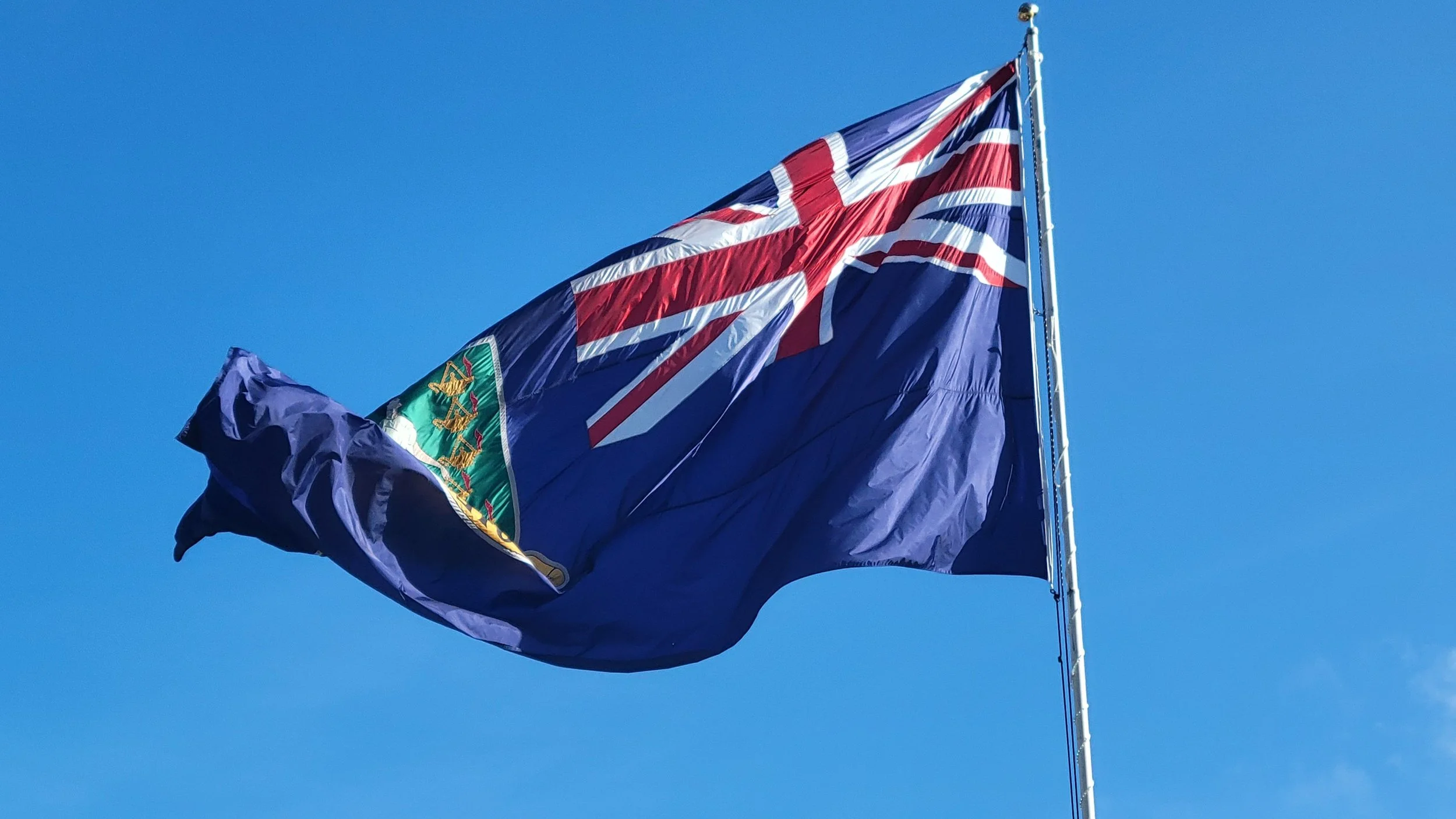
THE BRITISH VIRGIN ISLANDS (BVI)
The Geography
Let’s start with where it is.
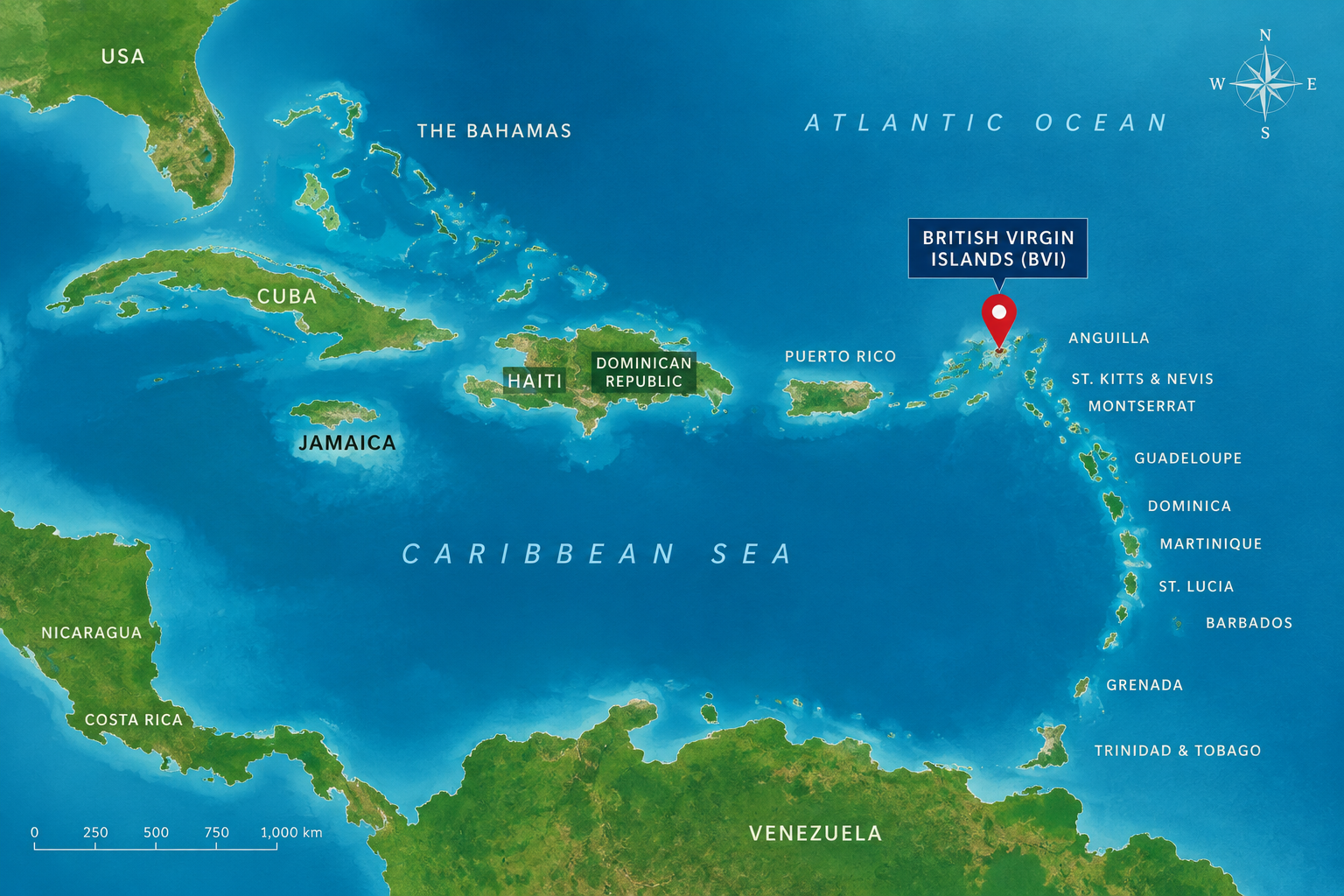
The BVI is part of what is known as the Leeward Islands, basically the lower middle of the Caribbean. The Caribbean arcs from Northwest to Southeast, from the US down to Venezuela.
To the West and North of the BVI you find Puerto Rico, Dominican Republic, Haiti, Turks & Caicos, Cuba, the Bahamas, and eventually the US.
To the East and South you have Anguilla, Saint Barts, St Kitts & Nevis, Montserrat, Guadeloupe, and the rest of the Caribbean (for skipping over everyone else – I’d be here a while if I named them all) – all the way down to Trinidad and Tobago until eventually you hit South America and Venezuela.
The BVI itself is made up of between 50 and 90 islands, depending on who you ask and how much rum they’ve had. The largest island is Tortola, where you will find the capital, Road Town.
The population of the BVI is around 30,000 – you could fit everyone into Elland Road (it’s the home of England’s greatest football team) and still have seats left over.
And that population is made up of people from all over the world.
Granted, a little out of date now, but a 2010 census recorded 39% of the population as born in the BVI with the remaining 61% born overseas. Of that 61% – the residents came from over 113 different countries.
The History
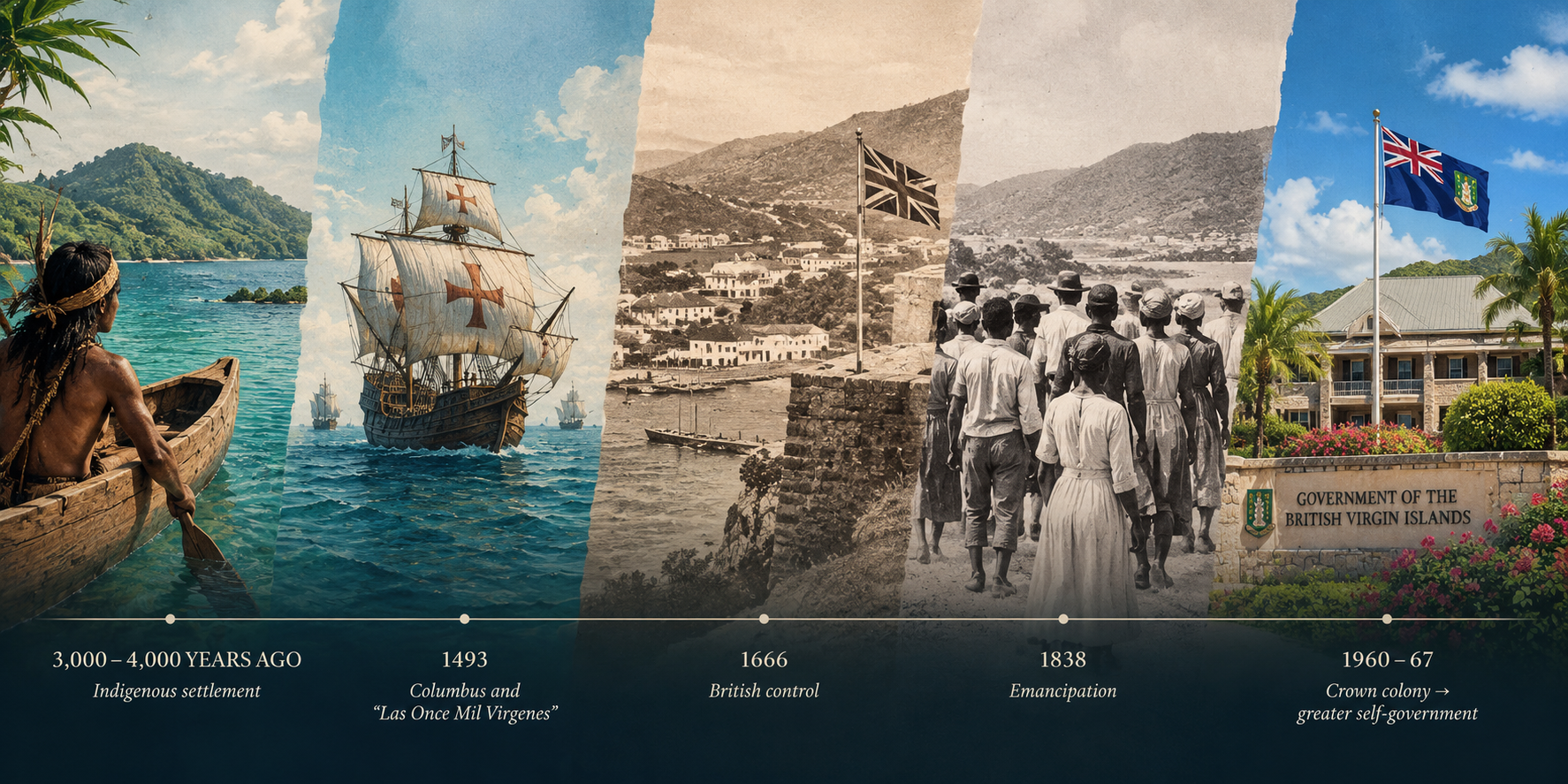
The first people to live in the BVI arrived 3 to 4,000 years ago, from South America, and there were various tribes inhabiting the islands up until Christopher Columbus passed through in 1493. He named the islands “Las Once Mil Virgenes” (the eleven thousand virgins) after the legend of Saint Ursula - who is now a prominent part of the BVI flag.
The BVI never actually developed into a major colony and constantly changed hands, with the Dutch, English, and other European colonisers all having interest in the Caribbean. It wasn’t until 1666 that the English took back and maintained longstanding control.
As was the case across the Caribbean, slavery became part of British colonialism in the region and lasted until 1838 when emancipation was granted.
For most of the period, the BVI was part of a wider territory, and it wasn’t until 1960 that it became a separate British Crown colony with, in 1967, a new constitution giving the BVI substantially greater internal self-governance and its first Chief Minister, Lavity Stoutt.
What’s important to note, during the century leading up to this point, is that the BVI struggled economically and many people left the jurisdiction for surrounding nations.
The Economy
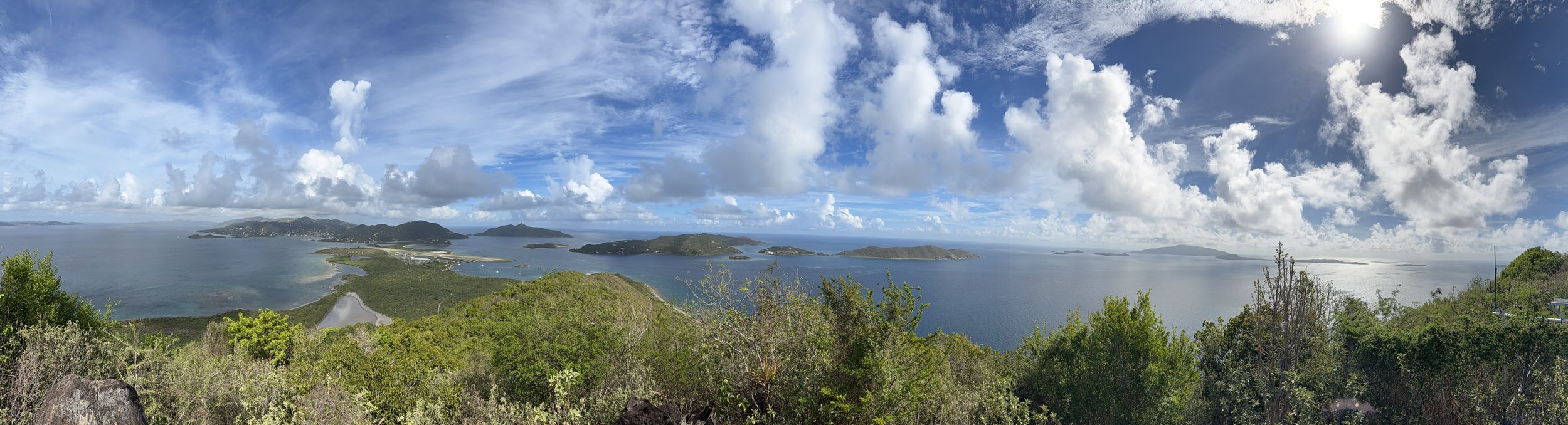
Because of its topography, hilly, no rivers, and many small islands, the BVI isn’t a great place for agriculture. Nor does it have natural resources – such as oil or precious metals.
This meant that the BVI had to find something else to drive the economy and two sectors emerged – tourism and financial services.
Tourism continues to be important to this day and is powered by the cruise industry and the BVI’s place as the sailing capital of the Caribbean – shallow waters, many islands, and favourable winds make it ideal for being on the water.
But, sadly, tourism isn’t the focus of The Offshore Report. Financial services it is then.
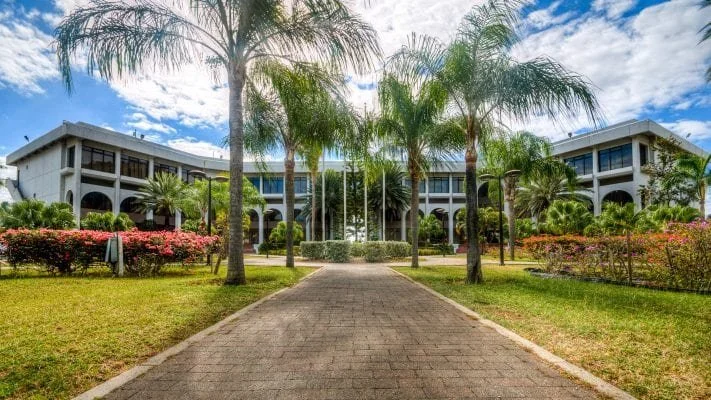
The Financial Centre
The important points to note, at the time of Lavity Stoutt’s appointment and the adoption of a BVI constitution, is that:
· The BVI had an English common law system – familiar the world over.
· It had its own government and courts but remained connected to Britain as an overseas territory – bringing stability.
· Its location – close to America and on Atlantic Standard Time – put it in the wider Northern and Southern economic sphere.
Then came the first breakthrough, the introduction of the International Business Companies (IBC) Act in 1984.
The BVI wasn’t the first to focus on developing an offshore financial centre (Cayman, Bermuda and the Bahamas were steadily developing their own) but what the IBC Act did for the BVI was make the creation of companies a sellable product.
The IBC Act allowed companies to be incorporated, relatively easily, for international business, with a flexible corporate structure, and a simple tax regime. Its architects recognised the modernity and success of Delaware corporate law and combined it with the globally recognised English common law that governed the islands.
To this day (although subsequently replaced and updated), BVI corporate law contains the best of British and US law. You will find concepts such as redomiciliation and statutory mergers (taken from the US) but combined with UK evolution of legal principles through case law.
As a result, lawyers, accountants, banks, trust companies, and all other kinds of professional services began using BVI companies for:
· Holding investments and assets.
· Joint ventures.
· International business.
· Financing transactions.
· M&A.
· Investment funds.
· Property ownership; and
· Private wealth structures.
This in turn led to those professionals establishing themselves in the jurisdiction to service the ever-growing number of companies – which in turn lead to the strengthening of the professional services sector – the incorporation of more companies – and the growth of the BVI as a broader financial centre, beyond just being the incorporator of companies.
The BVI didn’t simply pass the IBC Act and became on offshore centre overnight. The Act created the product and the product drew in the professionalism and infrastructure to turn the jurisdiction into a world leader.
The Growth
Between 1984 and 1997, incorporations in the BVI went from 1,000 to a whopping 60,000, a year.
However, the BVI’s success isn’t entirely of its own making. It also benefited from the fall of a competitor.
Panama had established itself as a leading offshore financial centre but, in 1989, it was invaded by the US which in turn badly damaged confidence in Panama as a place to establish international structures.
And there was another reason for the explosive growth.
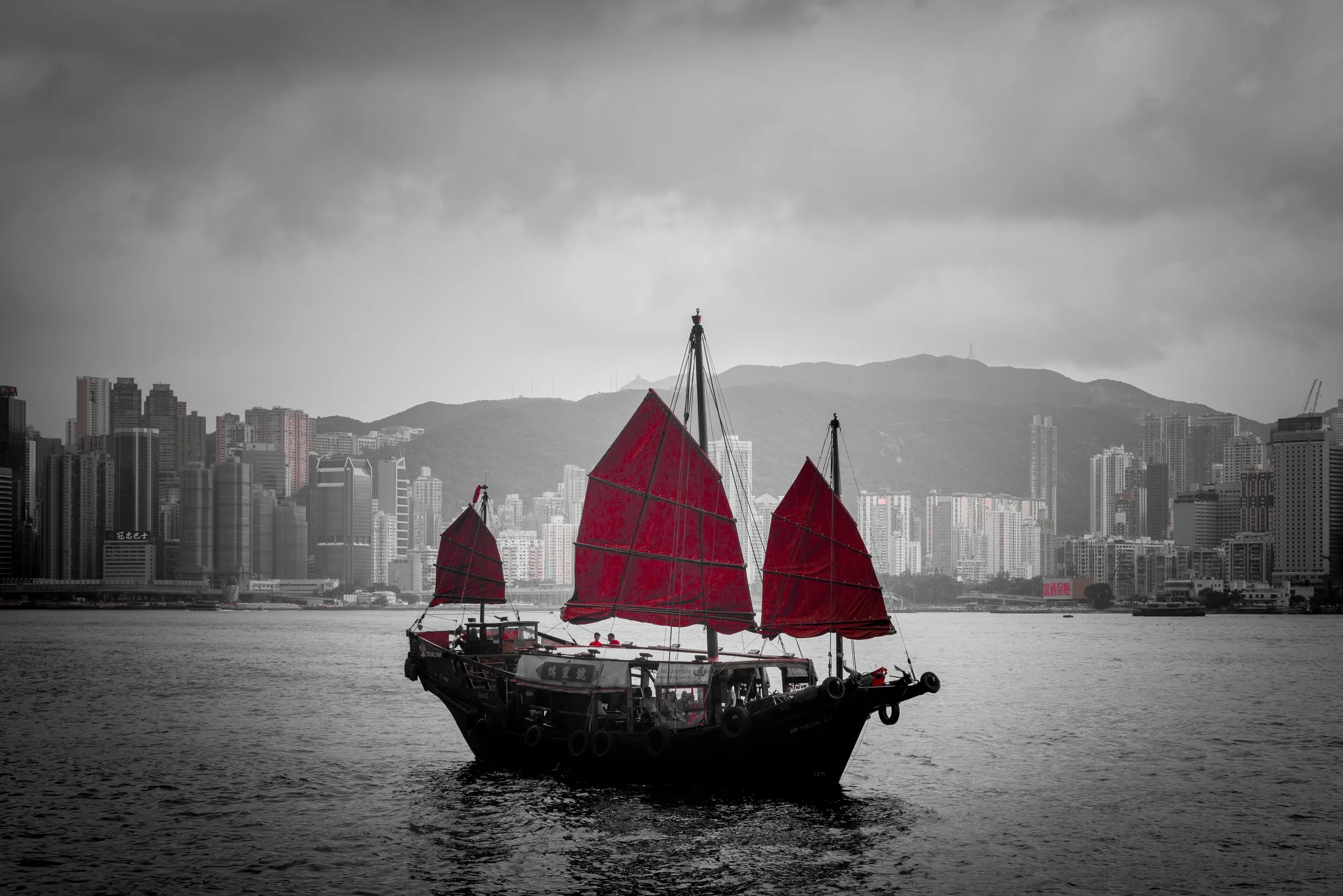
Originally, the BVI had developed the IBC Act with the US and UK in mind, but one of the biggest markets became Hong Kong.
As well as being the date the IBC Act came into force, 1984 was etched in Hong Kong’s history when it was announced that in 13 years it would return to Chinese sovereignty.
For Hong Kong businesses and wealthy families, this created uncertainty about would happen to their assets and businesses after the handover.
The BVI’s brand new legislation and product became an answer. It promised security and familiarity, because of its British constitutional links and English common law, but modernised. (It helped that the BVI sent a delegation to Hong Kong in 1989 to promote BVI IBC’s specifically as a vehicle for holding assets at the 1997 handover.)
In fact, BVI companies became so popular in Hong Kong that “BVI” became slang for an offshore company – i.e., “you need to setup a BVI”.
So, where does that leave us today?
The Threat
As the BVI continued to grow, its place as an international financial centre increasingly came under scrutiny and pressure from the onshore world.
The key concern, and the key question for onshore, was why companies and wealth could be structured through jurisdictions with little or no local taxation.
Ask any lawyer or politician and they will tell you everything always comes back to tax. And, if the only reason people used offshore companies was tax, the story of the BVI would be a simple one.
You incorporate a company somewhere with no corporation tax, save some money, and everyone goes home happy. Except that isn't how it works. A BVI company doesn't magically make tax disappear.
If you're a US citizen, a UK resident, a German company, or a Chinese business owner, your tax obligations don't evaporate because you've incorporated a company on a Caribbean island.
In fact, in many cases, the tax treatment of the people behind a BVI company is determined almost entirely by the countries where they live, operate, and earn their money.
But just because tax isn't the whole story doesn't mean it isn't part of the story. And, from the 1990s onwards, the BVI (and the offshore financial centres generally) found themselves increasingly under the microscope from the likes of the OECD, EU, FATF, and the UK.
Up until now, the BVI had been saying:
"Bring your international business here. We'll give you a flexible legal structure, efficient administration, and a tax-neutral platform."
But then the global institutions began to say:
"Fine. But we need to know who is behind these companies, where the money is coming from, and what they are doing."
As a result, over the last 10 years or so, you have a cat and mouse game where the BVI is put under pressure to make changes, and it does all it can to abide but while still maintaining its competitive advantage. It has worked on AML, KYC, information exchange, FATCA, CRS, beneficial ownership, economic substance, international tax initiatives, and sanctions and financial crime compliance.
At the end of the day, it is vital for the BVI, and its clients, that it stays on the right side of the line (as drawn by the global institutions) so that it can continue to operate in the global economy – it’s its life blood. And, for such a small island, with so few people, this is no mean feat, it is ultimately a testament to the resilience and adaptability of the jurisdiction that it’s been able to keep up with it all.
The Hurricane
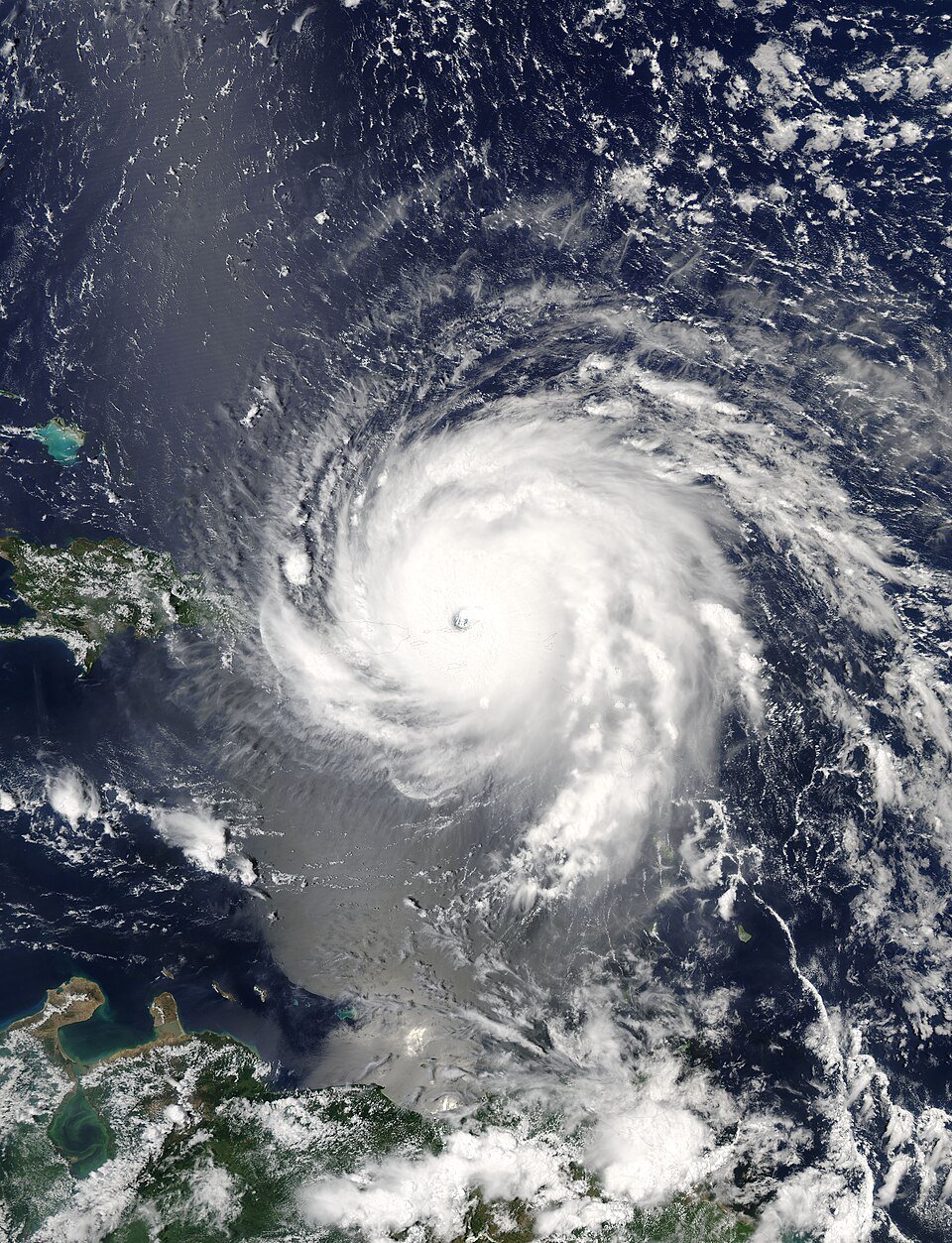
Then, on 6 September 2017, the BVI took the full brunt of Hurricane Irma. A category 5 hurricane that, according to reports, severely damaged or destroyed 80% of the BVI’s homes and businesses.
80%.
The estimated cost – $ 3.6 billion – around three and a half times the BVI’s annual GDP.
The BVI had spent three decades building itself into a global financial centre. And then, in a matter of hours, that financial centre was devastated and destroyed.
9 years on, you can still see signs of the damage wrought by Irma but not enough to truly understand what occurred that day and that is a testament to its people and their ability to withstand, adapt, and move forward.
By late September of 2017, the Government was publicly saying that financial services transactions had resumed the Monday following Irma. By November, a survey indicated that 73% of financial services employees were back in the BVI and working.
The BVI built its financial services industry because it had to adapt to its circumstances. Hurricane Irma tested whether that success had made the jurisdiction resilient enough to survive a catastrophe. And, overwhelmingly, the BVI showed the world that it was.

The Future
So, to end, where next?
Part of that answer is digital assets.
Again, the BVI spotted an opportunity and moved quickly to take advantage of it but it’s too early to tell how that will develop in the long term – especially with the AI revolution affecting us all.
Needless to say, whatever opportunities, and challenges, the BVI encounters in the next century, expect the same level of reliance and adaptability that has characterised it to date.